

8 Days Northern Circuit
Duration
Overview
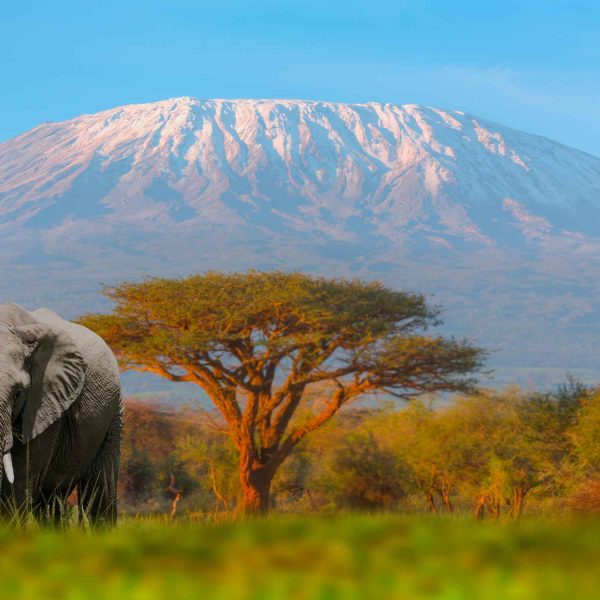
Mount Kilimanjaro can be climbed using six established routes. Marangu, Machame, and Umbwe approach the mountain from the south. Lemosho and Shira approach from the west. Rongai approaches from the north near the Kenyan border. All routes descend via the Mweka Route except Marangu and Rongai.
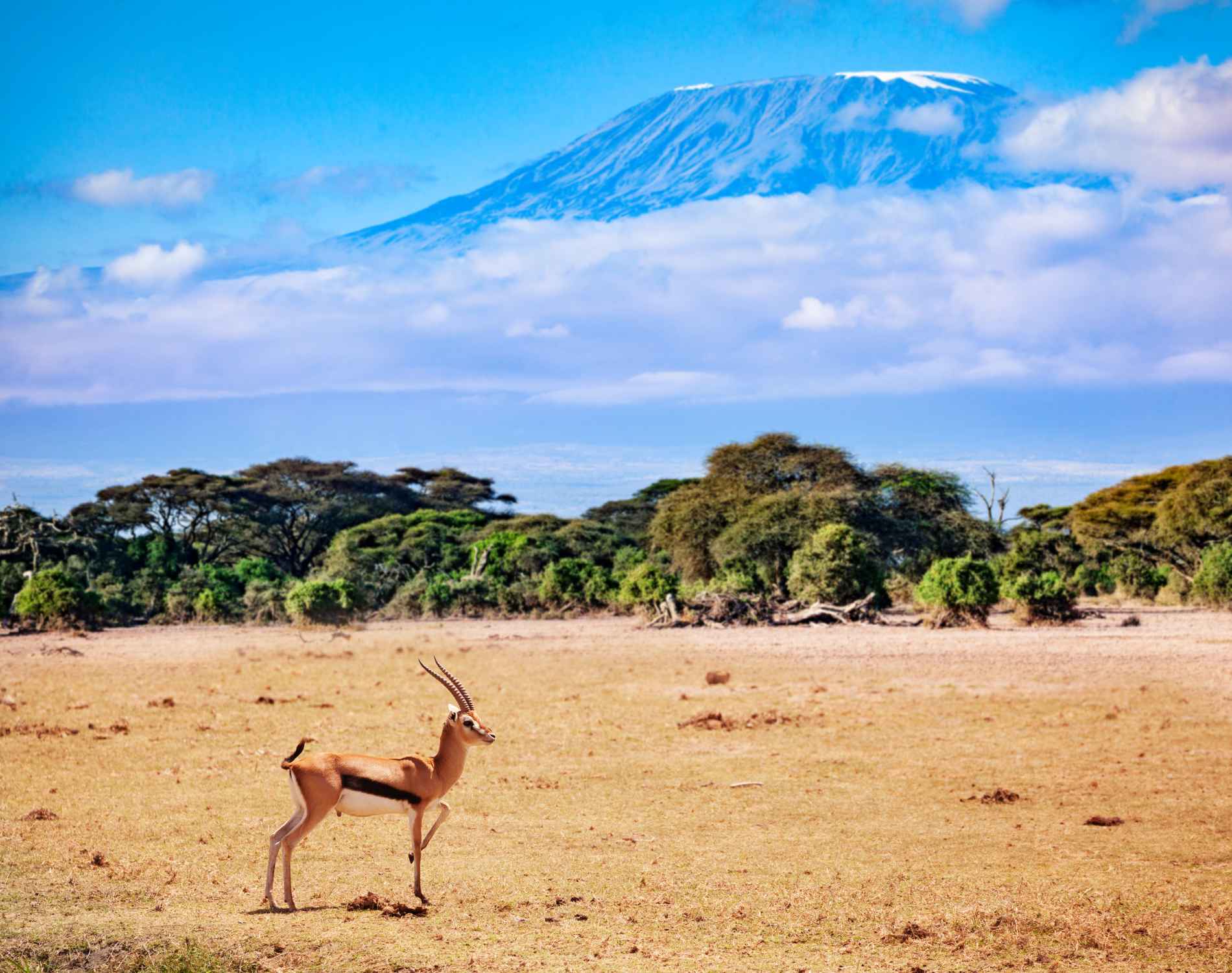
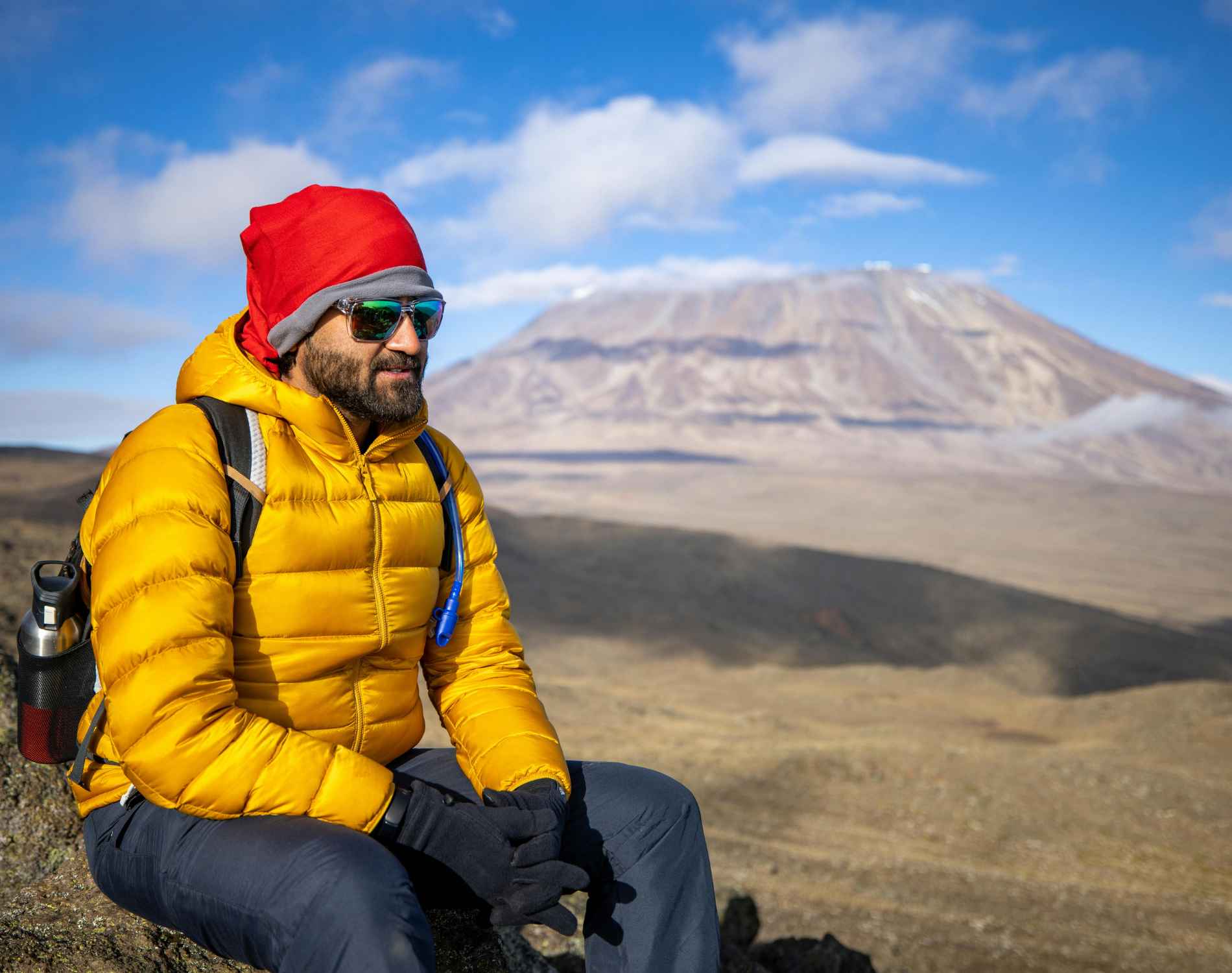
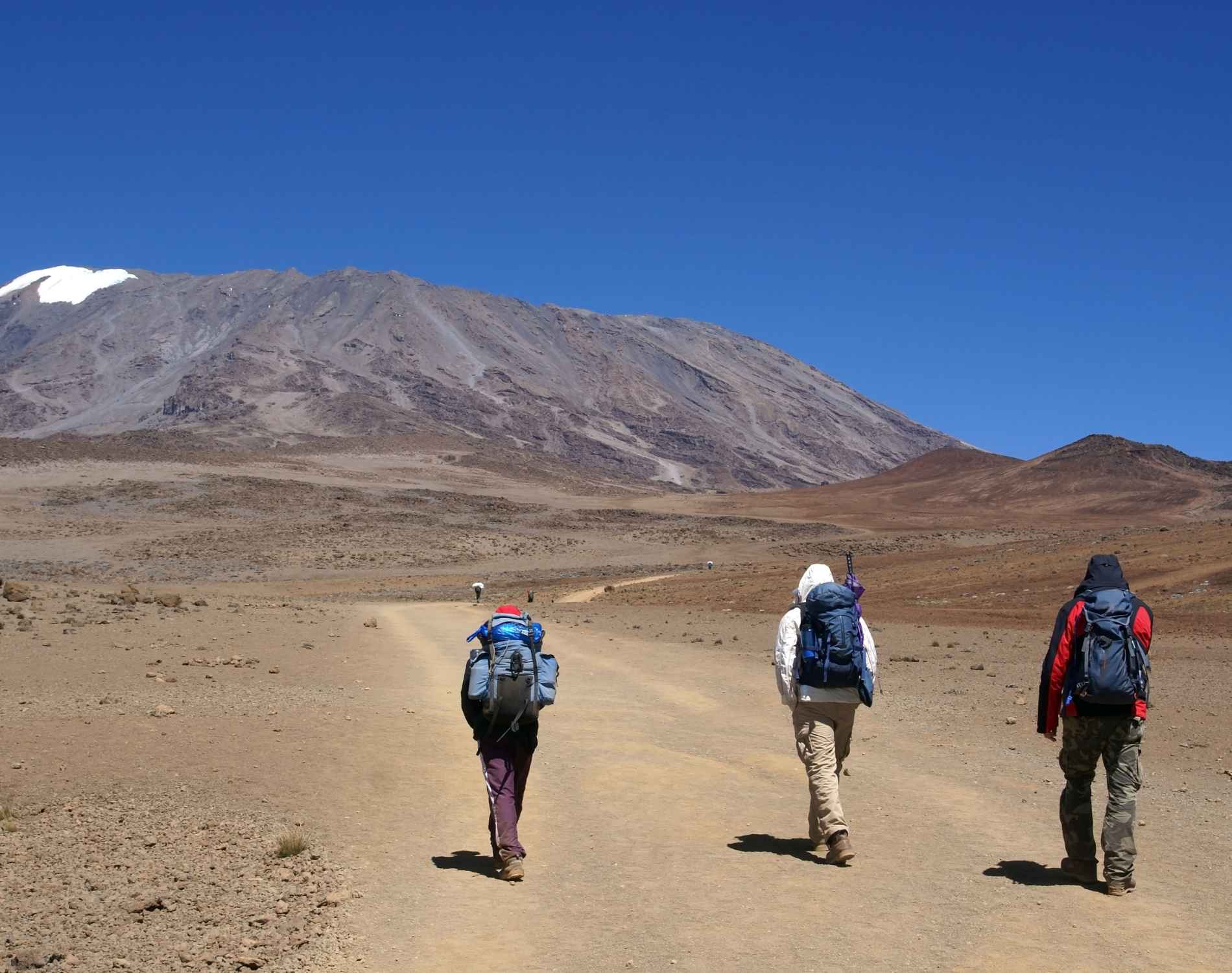
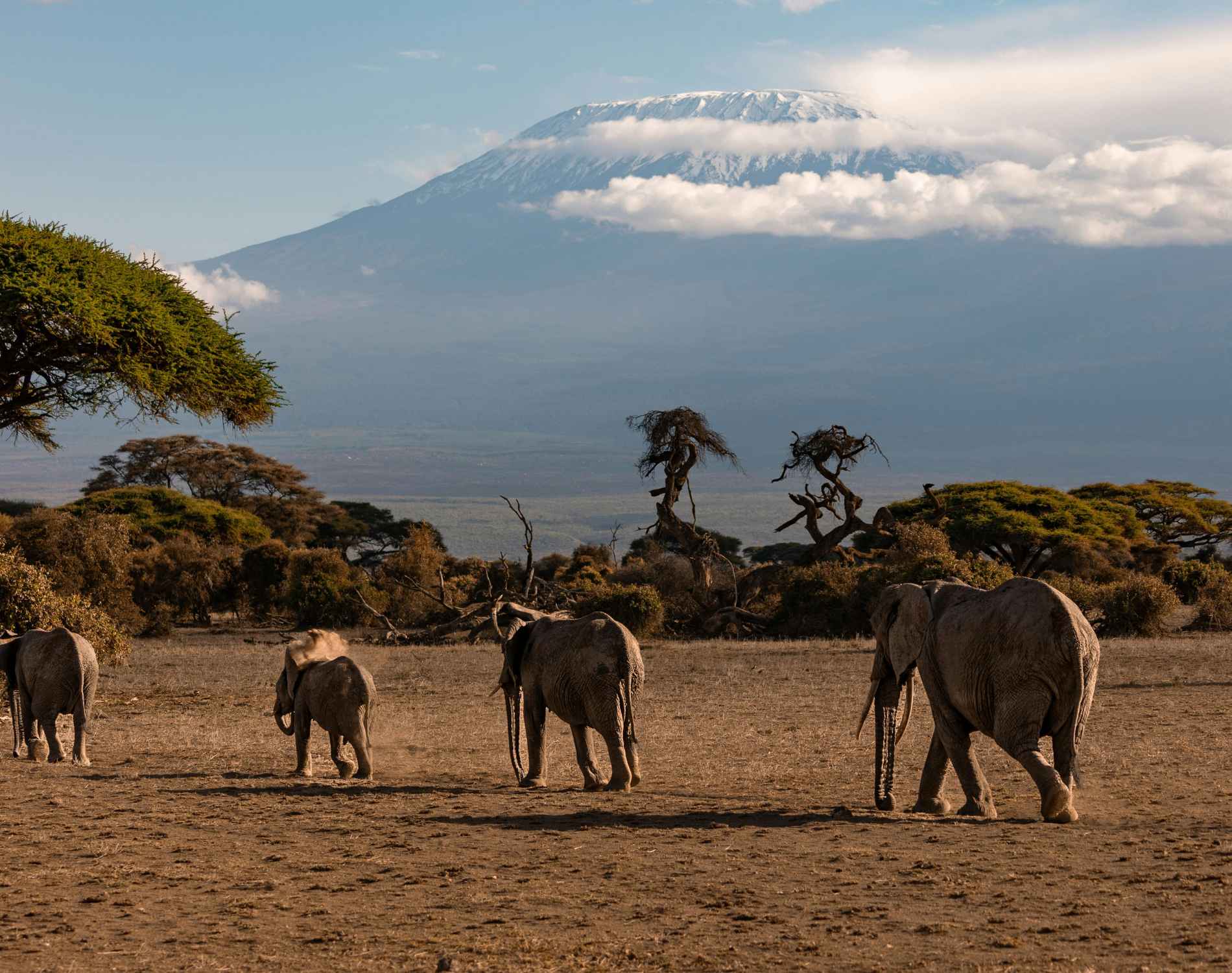
The Northern Circuit Route is considered one of the finest routes on Mount Kilimanjaro. It offers close to 360-degree panoramic views and access to the remote and rarely visited northern slopes of the mountain. As the longest route on Kilimanjaro, it provides the most comprehensive acclimatization profile and consistently delivers the highest summit success rates.
Landscape and Scenery
The route begins on the western side of the mountain after a longer drive from Moshi to Londorossi Gate. It passes through rainforest before reaching the Shira Plateau.
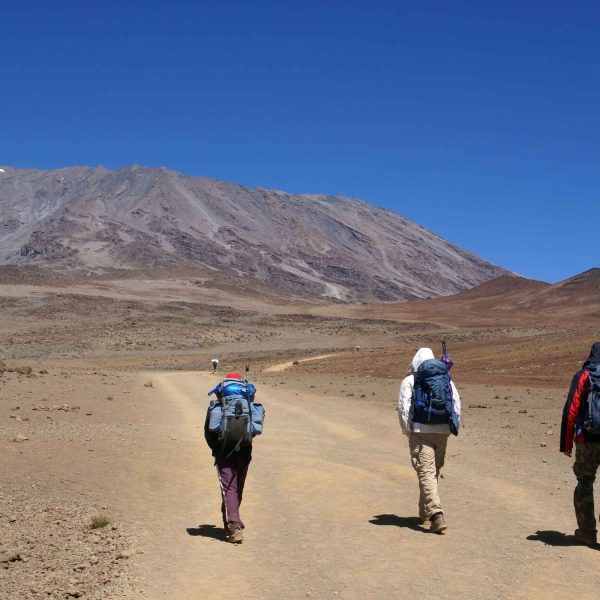
From there, the route turns north and circles the mountain clockwise, passing through remote areas near Moir Hut, Buffalo Camp, and School Hut. The northern slopes are quieter and more expansive, offering wide open views that are not accessible on other routes.
Acclimatization and Summit Success
The Northern Circuit’s extended length allows climbers to adapt gradually to altitude. This significantly reduces the risk of altitude-related issues and makes it the most reliable route for summit success.
The slow altitude gain and extended time on the mountain make this route ideal for climbers who prioritize safety, comfort, and success over speed.
Summit Attempt
The summit attempt is made from the eastern side of the mountain. Climbers reach the crater rim before continuing to Uhuru Peak. Due to the excellent acclimatization profile, climbers often arrive at summit night in better physical condition compared to shorter routes.
Route Characteristics
-
Duration: 9 or 10 days
-
Difficulty: Medium
-
Scenery: Excellent
-
Traffic: Low
-
Accommodation Style: Fully supported camping
Arrival and Pre-Climb Briefing
Upon arrival at Kilimanjaro International Airport, climbers are transferred to a hotel near the mountain for overnight accommodation on a bed and breakfast basis.
Before the climb, the head guide conducts a detailed briefing and gear inspection. Any required equipment can be arranged locally prior to departure.
Pricing
8 Days | 7 Nights . Price Per Person (USD)
Group Size | Price Per Person
| Group Size | Price Per Person |
|---|---|
| 1 Person | USD 2,670 |
Solo & Supplement Charges (USD)
| Charge Type | Cost |
|---|---|
| Solo Climber Add-On | USD 350 |
| Single Supplement | USD 300 |
Prices are indicative and subject to current government-regulated park fees at the time of departure.
Typical Crew Composition (2 Climbers)
-
1 Lead Guide
-
1 Assistant Guide
-
1 Cook
-
1 Waiter
-
1 Toilet Porter
-
10 Porters
Included/Exclude
- Kilimanjaro trekking according to the agreed itinerary
- Professional, English-speaking guide (Wilderness First Responder & CPR certified)
- Proper ration and support of the mountain crew (cook & porters)
- Pre- and post-trek accommodation (2 nights, Bed & Breakfast)
- Airport transfers (arrival & departure)
- All meals on the mountain as per the itinerary (full board)
- Safe drinking water throughout the trek
- All National Park fees, hut/camping fees, crew permits, and VAT
- Fair and sustainable wages for all mountain crew
- Gate transfers
- Complimentary oxygen cylinder (for emergency use)
- Private portable toilet with a dedicated porter
- Use of quality, imported trekking equipment
- International and domestic flights
- Visa fees
- Travel and medical insurance (mandatory – recommendations available)
- Gamow (hyperbaric) bag
- Personal medications
- Tips for porters and mountain crew
- Personal expenses (souvenirs, snacks, etc.)
- Energy foods and beverages, including alcoholic and soft drinks
- Personal hire gear (e.g. trekking poles, sleeping bags, etc.)
- Additional accommodation costs in case of early descent from the mountain
Tour Plan
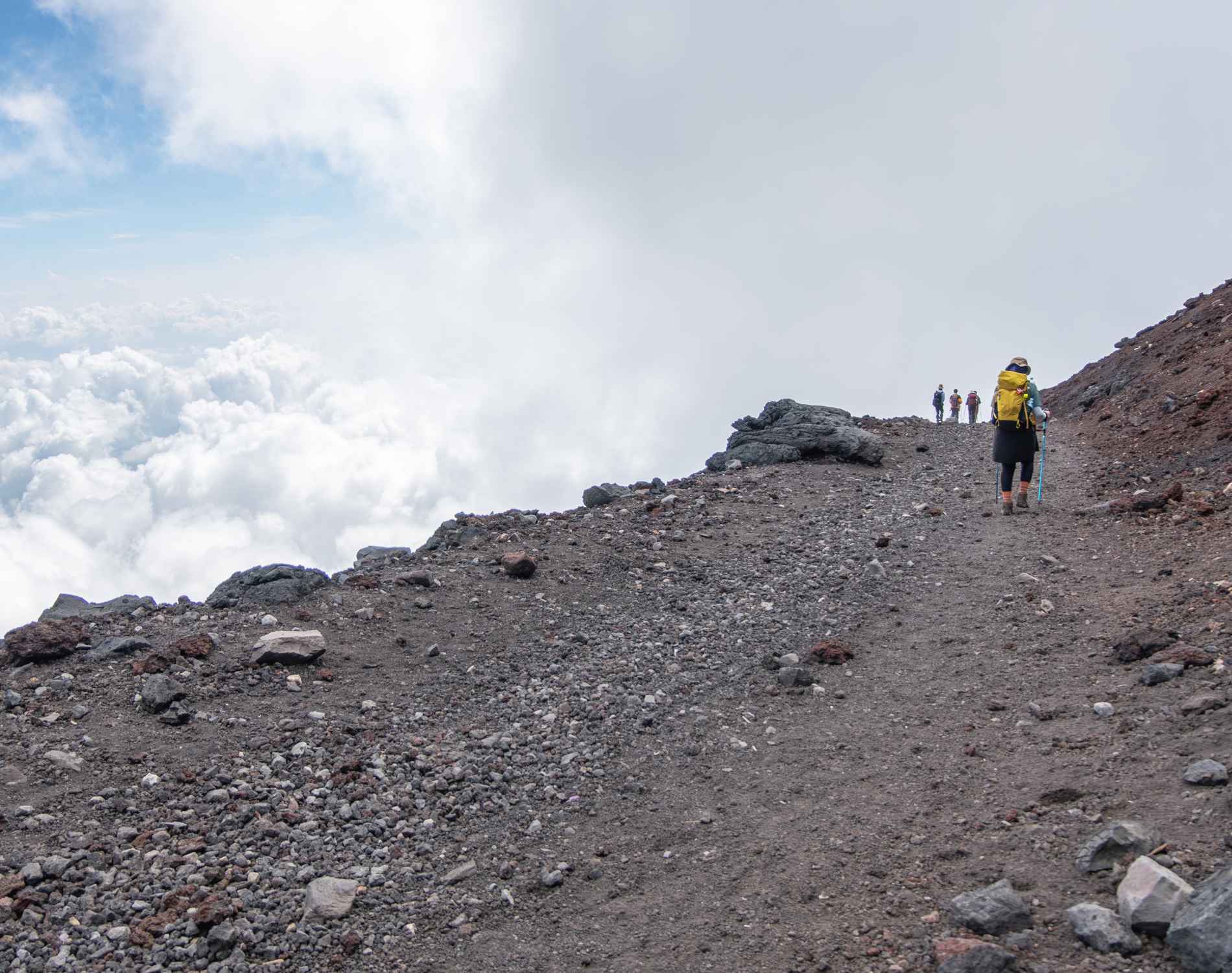
Departing from Moshi a 3 hours drive will take you through welcoming mountainside villages to the Kilimanjaro National Park Gate. We will patiently wait for our permits to be issued while watching the hustle and bustle of operations as many crews prepare for the journey ahead Enjoy the beautiful rainforest scenery and windy trails while your guide tells you about the local flora and fauna and natural wildlife. At these lower elevations, the trail can be muddy and quite slippery. We highly recommend gaiters and trekking poles here.
You will spend the first-hour trekking through the last section of rainforest path before entering the low alpine moorland zone which follows up onto the Shira Plateau. The trek is relatively short and gradual, ending at Shira Camp 1 (3,504 meters).
A long trek heading east which passes through the ‘Garden of the Senecios’ and then enters the high alpine desert zone. The morning is spent trekking up to Lava Tower and the iconic Shark’s Tooth rock formation at 4,600 meters, where you will have lunch. After lunch, you will join the northern circuit heading down to Moir Camp at 4,161 meters (see map above). This is an important day in your trek as you will get to experience high altitude and then sleep low, which is good for the acclimatization process.
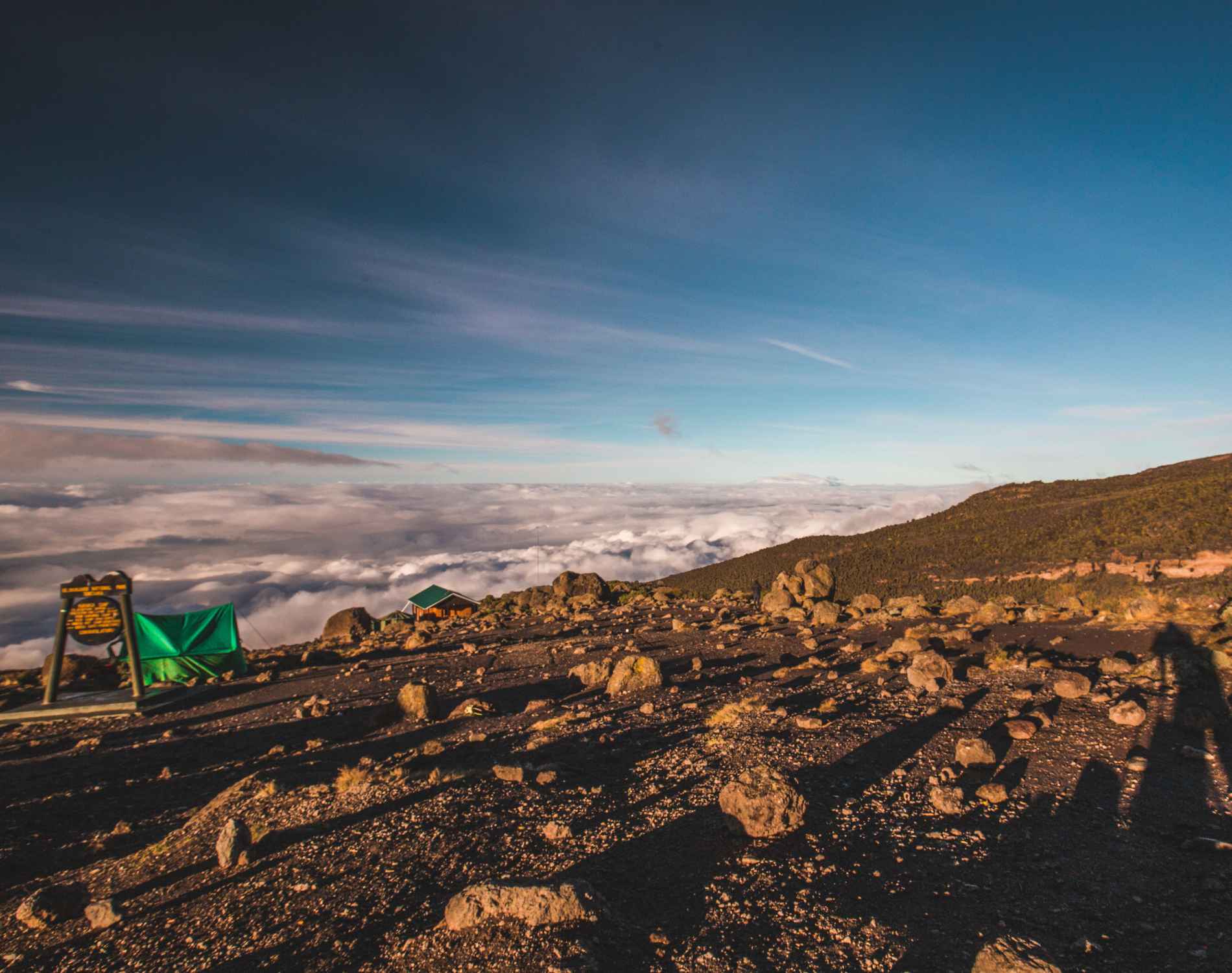
Today it involves a moderately steep climb out of Moir Valley. Trekkers can take a small detour here to climb the summit of Little Lent Hill at 4,375 meters before returning to the Northern Circuit trail. From here the route follows a series of inclines and declines, skirting around the northern slopes of Kibo to Buffalo Camp (4,033 meters). The trek gives great vistas out across the plains that lie north of Kilimanjaro and stretch out to the Kenyan / Tanzanian border. You will arrive at Buffalo Camp just after midday, where you will have lunch and have time to rest after a long day hiking.
Starts with a climb up the Buffalo Ridge and down into Pofu Camp where lunch is usually served. The route then continues east around the northern slopes to the Rongai Third Cave at 3,936 meters. The trek is shorter than the day before and by now you should be feeling well acclimatized to the altitude. You will arrive at the Third Cave just around mid-afternoon.
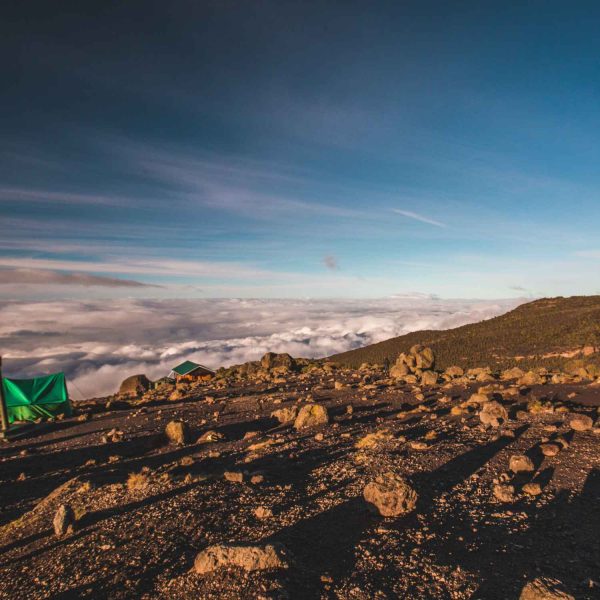
Today it involves a steady incline up and over the Saddle which sits between the peaks of Kibo and Mawenzi Peak. Trekkers then continue walking south-west up to School Hut (4,800 meters). After arriving at School Hut you will be served an early dinner and then you should get some shut-eye as you will be awoken before midnight to start your summit attempt. Remember to prepare all your gear, including warm clothes, insulated water bottles, snacks, headlamp, and camera before going to bed.
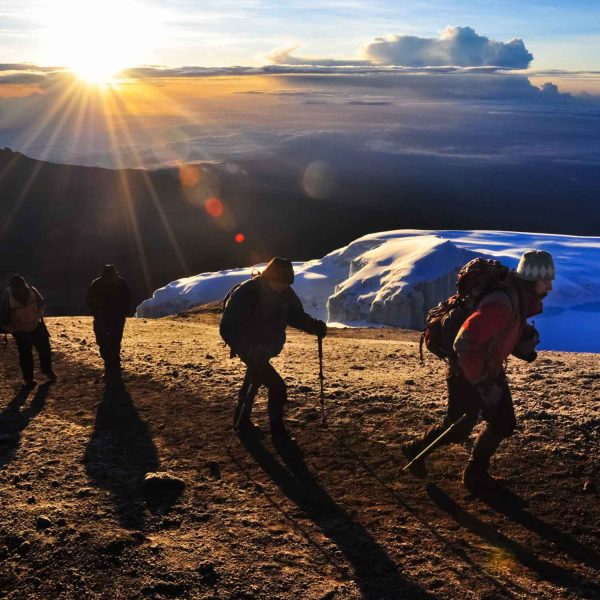
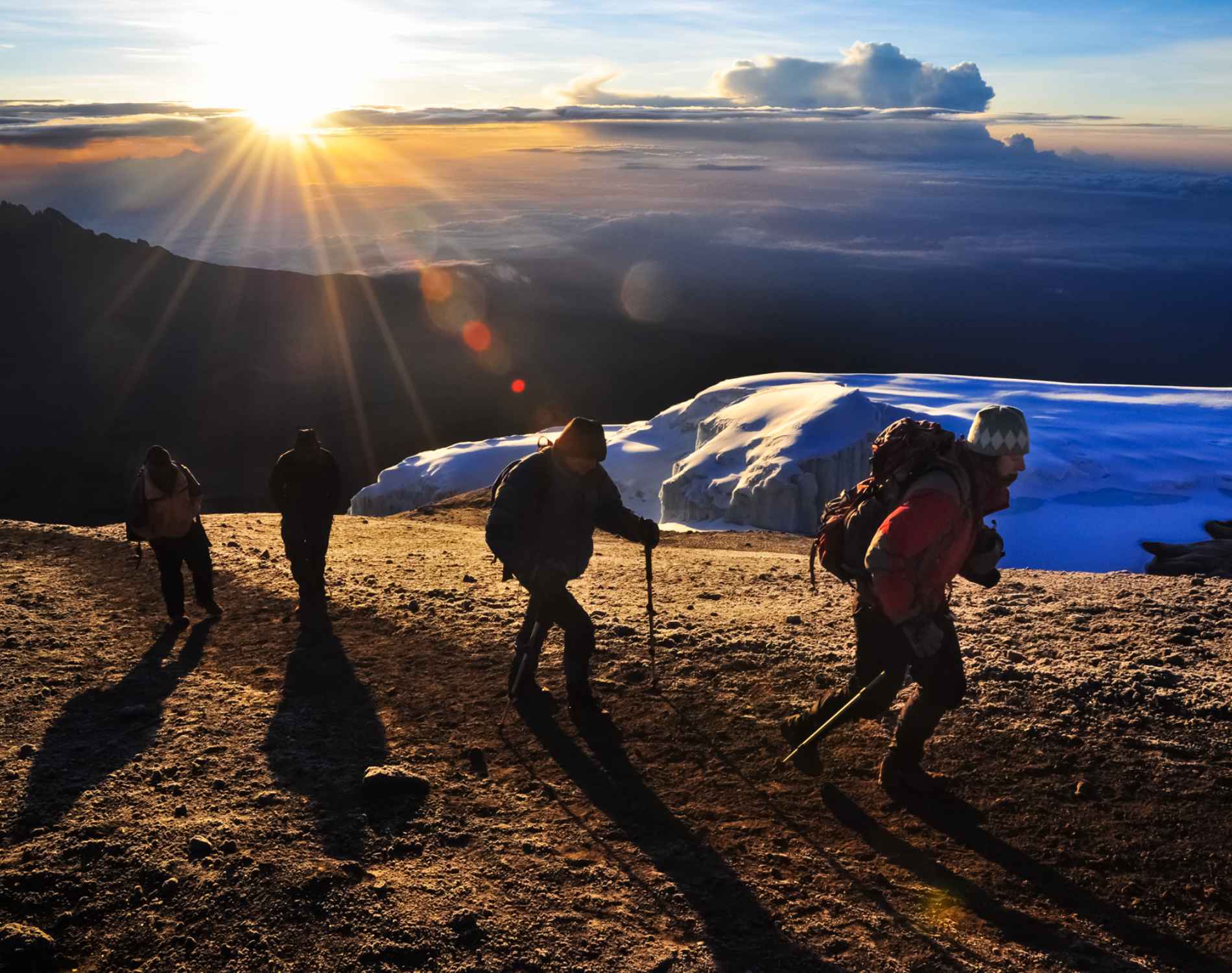
You will be awoken around 11:30 with hot tea and biscuits and will then begin the steep incline up to the slopes of Kibo under the cover of darkness. Your first check-point is Hans Meyer Cave where you will take a short break. The climb steepens as you approach Gilman’s Point (5,681 meters), which will be around 5-6 hours after departing School Hut. Take a moment to enjoy the approaching dawn and incredible view out and across to Mawenzi Peak, but remember you still have 2 hours trekking to reach Uhuru Peak so dig deep for the energy. The slope flattens as you head west around the crater rim and you should arrive at the summit at or just after sunrise. Your stay here will be brief so get as many pictures as you can of the incredible views and surrounding glaciers. You will then retrace your steps back around the crater rim to Stella Point (5,739 meters) where you will turn south and head down the heavily screed slopes of Kibo to Barafu Camp (4,680 meters). Most trekkers take a short break here before continuing down to Millennium Camp (3,950 meters) for your final night on the mountain. In total, you will be trekking for 14-16 hours on day eight so it is important to pace yourself, remain hydrated and keep your blood sugar levels up. Note: some tour operators return via Gilman’s Point to Horombo Hut using the Marangu Route.
You will be awoken around 11:30 with hot tea and biscuits and will then begin the steep incline up to the slopes of Kibo under the cover of darkness. Your first check-point is Hans Meyer Cave where you will take a short break. The climb steepens as you approach Gilman’s Point (5,681 meters)
After breakfast and a heartfelt ceremony of appreciation and team bonding with your crew, it’s time to say goodbye. We continue the descent down to the Mweka Park Gate to receive your summit certificates. As the weather is drastically warmer, the terrain is wet, muddy and steep and we highly recommend Gaiters and trekking poles.
From the gate, a vehicle will meet you at Mweka village to drive you back to your hotel in Moshi (about 30 minutes). Enjoy a long overdue hot shower, dinner and celebrations!!
Book Now
Tour Information
Max Guests
Min Age
Frequently Asked Questions
Most frequent questions and answers
I am item content. Click edit button to change this text. Lorem ipsum dolor sit amet, consectetur adipiscing elit. Ut elit tellus, luctus nec ullamcorper mattis, pulvinar dapibus leo.
Trips can be arranged as private or shared, depending on the package and group size. Private trips offer more flexibility, while shared trips can reduce costs.
Packing depends on the destination and activity. After booking, we provide clear packing guidance to help you prepare properly and comfortably.
Travel insurance is strongly recommended for all travelers. It should cover medical expenses, trip cancellation, and emergency evacuation where applicable.
Yes. Please inform us in advance about any dietary needs or allergies so we can plan accordingly.
Trips may be adjusted for safety reasons due to weather or local conditions. Any necessary changes are communicated clearly, with safety always as the priority.
Our team is available before and during your trip to assist with questions, updates, or support. Contact details are shared upon confirmation.
Local Experts with Deep Tanzania Knowledge
100% Tanzania-focused expertise
We specialize in Tanzania, allowing us to design trips with real local insight, accurate timing, and destination-specific knowledge.
Private Safaris with Dedicated Vehicles
Travel in your own private safari vehicle with an experienced guide, ensuring flexibility, comfort, and a personalized pace every day.
Local travel specialists based in Tanzania
Our team lives and works in Tanzania, giving you first-hand advice, up-to-date conditions, and on-the-ground support throughout your journey.
Carefully Planned Itineraries, Not Generic Tours
Each itinerary is thoughtfully designed based on seasons, wildlife movement, and travel flow. No rushed schedules or copy-paste routes.
Personalized Support Before, During, and After Your Trip
From planning and preparation to on-trip assistance and follow-up, we support you at every stage for a smooth, stress-free experience.
Fast, Clear, and Reliable Communication
We respond quickly, explain clearly, and keep you informed, so you always know what to expect and feel confident in your plans.